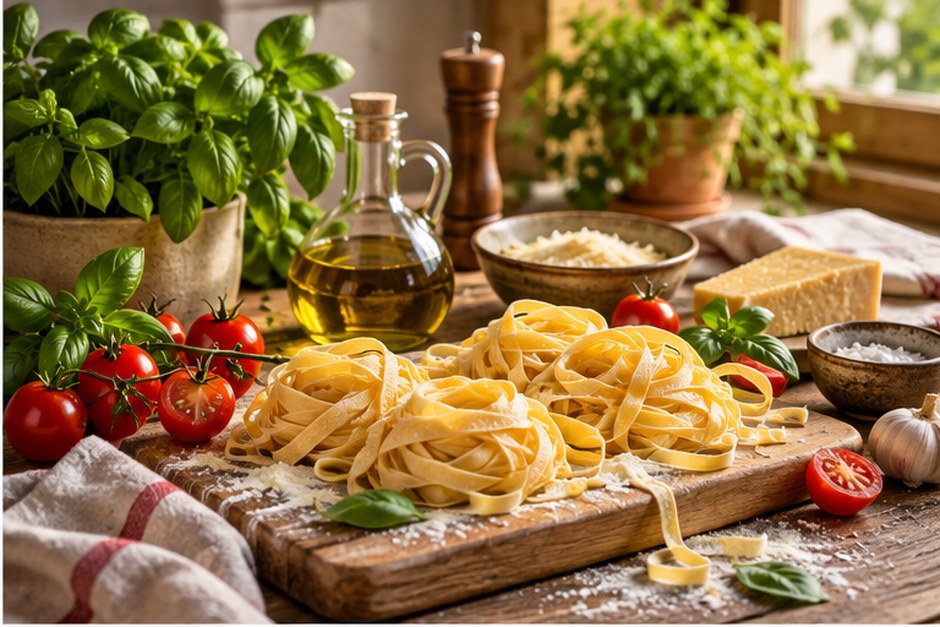
A Weeknight Pasta Ritual Built Around Fresh Herbs
There is a useful difference between a quick dinner and a rushed dinner. Pasta can be both fast and calm when the meal is built around a few ingredients that do not need much intervention. Fresh herbs are especially good at this. A handful of basil, parsley, mint, or chives can make a simple bowl of pasta taste deliberate without turning the evening into a project.
The idea is less a recipe than a small routine. Put the water on first. While it heats, prepare one aromatic base, one fresh element, and one finishing ingredient. By the time the pasta is ready, everything else should be waiting for it.
Start with one herb, not a crowded mixture
Choosing a single herb gives the dish a clearer direction. Basil naturally suits tomatoes, olive oil, garlic, and mild cheeses. Parsley works well with lemon, toasted breadcrumbs, capers, or mushrooms. Mint can brighten peas, courgettes, and soft cheese. Chives are gentle enough for butter, cream, eggs, or simply grated hard cheese.
If you have several herbs that need using, combine two with similar characters rather than throwing in everything. Basil and parsley are easy companions. Mint and parsley can work with peas and lemon. Strong woody herbs such as rosemary and sage deserve a different treatment; they are usually better cooked briefly in oil or butter rather than stirred in raw at the end.
Make a base while the water heats
The base can be as simple as olive oil warmed with sliced garlic. Keep the heat moderate so the garlic softens and perfumes the oil without becoming bitter. Add chilli flakes if you like a little heat, or a strip of lemon zest for fragrance. This takes only a few minutes and creates enough flavour to carry the rest of the dish.
For a more substantial version, add halved cherry tomatoes and let them slump in the pan. Mushrooms can be browned separately before the garlic goes in. Frozen peas need little more than a minute or two. The goal is not to build a heavy sauce, but to create something that can coat the pasta once a little cooking water is added.
Use the pasta water as an ingredient
Before draining, scoop out a mug of the starchy cooking water. This is the easiest way to turn oil, cheese, and pan juices into a light sauce. Add the drained pasta directly to the pan with a splash of water and toss over low heat. If the pasta looks dry, add another spoonful. If it looks loose, keep tossing for thirty seconds.
This step is more useful than adding a large amount of extra oil. The starch helps the sauce cling to the pasta, while the movement in the pan brings everything together. It also gives you a chance to taste before adding the herbs, which are usually best kept away from prolonged heat.
Add herbs in two stages
For a fresher flavour, tear or roughly chop most of the herbs and fold them through the pasta after the heat is off. Reserve a smaller handful for the top of each bowl. The first addition perfumes the whole dish; the second gives little bursts of brightness as you eat.
Delicate herbs bruise quickly, so there is no need for perfect knife work. Basil can simply be torn. Parsley can be chopped loosely. If the stems are tender, include them. They have plenty of flavour and save unnecessary trimming.
Finish with contrast
A good weeknight pasta often needs one contrasting element. Grated parmesan or pecorino brings salt and richness. Toasted breadcrumbs add crunch. Lemon juice adds sharpness. A spoonful of ricotta softens the whole bowl. Choose one or two, not all of them.
For the pasta itself, shape matters less than habit. Spaghetti is good with silky oil-based sauces, while short shapes hold peas, tomatoes, and breadcrumbs nicely. Use what is already in the cupboard. The ritual works because it is adaptable, not because it depends on a specific packet.
Turn repetition into a strength
Cooking the same basic dinner every week can sound boring, but repetition is what makes a useful routine effortless. Once you know the order—water, base, pasta, cooking water, herbs, finish—you can change the ingredients without changing the mental workload.
One week might be basil, tomatoes, and parmesan. The next could be parsley, lemon, and breadcrumbs. A third might use mint, peas, and ricotta. The structure stays familiar while the flavour follows the season, the fridge, and whatever herbs are still lively on the windowsill.
That is the real appeal of a weeknight pasta ritual: it gives an ordinary evening a small point of focus. Dinner arrives quickly, the kitchen does not fill with dishes, and a handful of fresh herbs makes the whole thing feel more generous than the effort required.