A Window-Seat Guide to Slow Rail Journeys
Some journeys are better when the route is part of the day rather than something to get through. A scenic train ride offers a rare kind of travel time: you can watch a valley widen, see villages appear and disappear, read for an hour, then look up and find that the light has changed completely. The pleasure is not in collecting as many stops as possible. It is in giving the landscape enough time to become the main event.
Slow rail travel works best with a little preparation and a loose plan. You do not need a complicated itinerary, but you do want to remove the small frictions that can pull your attention away from the view. A comfortable seat, a modest bag, food that is easy to eat, and a realistic connection schedule can make a long train day feel surprisingly restful.
Choose the route before the timetable
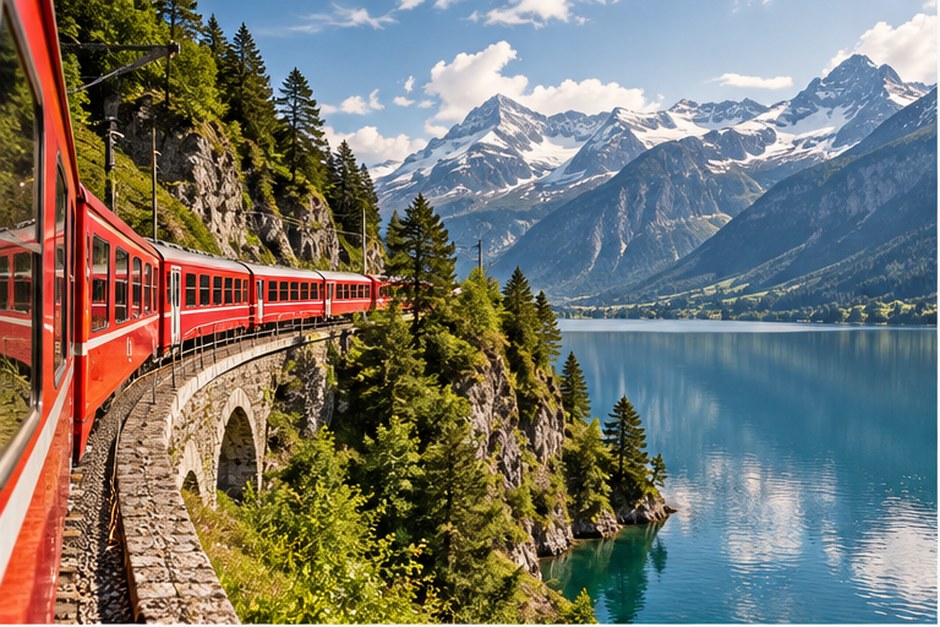
When the purpose of the trip is the ride itself, start by looking at the character of the route. Mountain lines, lakeside sections, coastal stretches, and rural branch lines all create very different days. A faster train may save an hour while skipping the scenery that made the journey appealing in the first place. If there is a choice between an express and a slower regional service, compare where each one actually runs rather than only the arrival time.
It can also help to choose one or two stations where you would be happy to pause. A short break for coffee or a walk through a small town makes the journey feel less like a continuous block of sitting. The best stops are often the ones that do not require a checklist: a station near a lake, a compact old centre, or a village where a bakery and a bench are enough.
Pack for movement, not for every possibility
A light bag changes the whole experience. If you can lift it into an overhead rack without thinking about it, you are more willing to move to a quieter carriage, step off for a short break, or change platforms without stress. For a day trip, a small backpack is usually enough for water, a layer, headphones, a charger, and something to read.
Food should be simple and tidy. A sandwich, fruit, a small pastry, or a container of nuts is easier than anything that needs cutlery or a lot of table space. Bring a reusable bottle, but avoid overpacking drinks if you know there will be station cafés along the way. Part of the charm of a long route is buying something ordinary in an unfamiliar place.
Make the window seat work for you
If the landscape matters, check the direction of travel and the likely side of the main views when possible. It is not always predictable, especially on lines that curve repeatedly, so avoid treating one side as essential. A better strategy is to keep your belongings compact enough that you can change seats when the carriage is quiet.
Reflections can be a nuisance if you want to take photographs through the glass. Turning off nearby interior lights is rarely an option, but you can reduce glare by holding the camera or phone close to the window and shading it with a hand or dark sleeve. A clean section of glass matters more than expensive equipment. Most of the best train photographs are quick records of atmosphere rather than technically perfect landscapes.
Leave room for doing nothing
It is tempting to fill travel time with podcasts, messages, and downloaded entertainment. Keep some of those options, but do not schedule the whole ride. Long stretches of looking out of a window are not wasted time. They are one of the reasons to take the train in the first place.
Try noticing the small changes that are easy to miss from a road: roof materials, garden walls, river colours, the way fields are divided, or how quickly the architecture changes after a mountain pass. These details give a route its identity. They also make the journey memorable without requiring you to visit every place you see.
Build generous connections
A slow-travel day becomes much less relaxing when every transfer is a sprint. If you need to change trains, choose a connection that leaves enough time to find the platform, buy a drink, and absorb a small delay. The extra twenty minutes often feels like part of the day rather than dead time, especially in a station with a pleasant concourse or nearby square.
For the final leg, avoid planning something demanding immediately after arrival. A walk to the hotel, an uncomplicated dinner, or a short evening stroll fits the mood better than a tightly timed reservation across town. The point is to let the pace of the rail journey carry into the rest of the day.
A good rail day has a simple shape
The most satisfying scenic train trips tend to be uncomplicated: one main route, a comfortable amount of luggage, a little food, and enough time to look around. You arrive having already experienced something, even before you begin exploring the destination. That is what makes slow rail travel distinct. The journey is not the space between two useful points; it is a place in its own right.