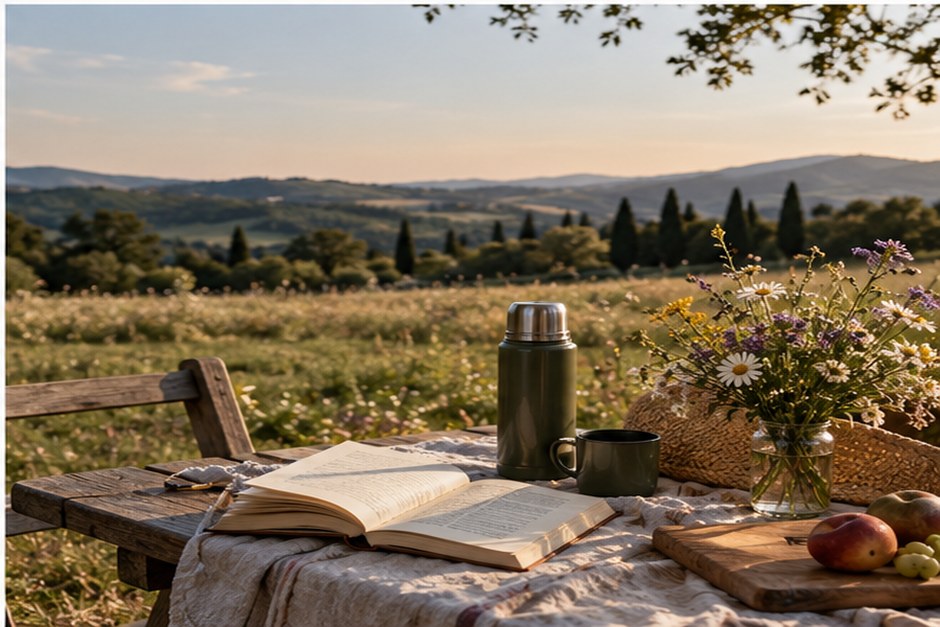
How we choose, research, edit, and present stories about travel, food, books, places, and everyday routines.
How We Shape a Field & Table Story
Field & Table Journal is built around useful detail and a calm editorial pace. We choose subjects that can be experienced without specialist knowledge: a scenic train ride, an easy meal, a reading habit, a morning walk, or a place worth noticing. Each story is edited for clarity, context, and practicality. We separate observation from instruction, avoid exaggerated promises, and leave room for readers to adapt an idea to their own day.
Our four-part editorial process
01
Choose a clear everyday subject
We begin with a specific experience or question that can be explored in a focused article rather than trying to cover an entire topic at once.
02
Gather useful context
We collect background, practical details, and common variations so the final piece explains what matters without burying the reader in trivia.
03
Edit for a real day
We read the draft as a reader would use it: checking the order, the amount of time implied, the objects or preparation required, and whether the advice still feels natural.
04
Keep the useful details
We trim repetition, keep the details that change the experience, and make uncertainty or local variation clear when it matters.
Our approach to practical leisure writing
Field & Table Journal aims for useful, low-pressure writing. We describe routes, routines, ingredients, spaces, and observations in enough detail to be helpful while leaving readers free to choose what fits their own time, budget, taste, and location.
Frequently Asked Questions About Our Editorial Process
How do you choose article ideas?
We look for subjects with a clear everyday angle and enough practical texture to support a useful story—something a reader could realistically try, visit, cook, read, or notice.
What do you check before publishing?
We check structure, clarity, internal consistency, and whether practical claims are framed with the right amount of context. We also remove filler that does not help the reader.
Are the articles meant to be followed exactly?
No. Our guides are starting points. Routes, ingredients, schedules, and local conditions vary, so readers should adapt the details to their own circumstances.
Why do some stories read more like essays than checklists?
No. Our guides are starting points. Routes, ingredients, schedules, and local conditions vary, so readers should adapt the details to their own circumstances.
Can readers suggest corrections or new topics?
No. Our guides are starting points. Routes, ingredients, schedules, and local conditions vary, so readers should adapt the details to their own circumstances.
We use cookies
We use cookies to ensure the proper functioning of the website, analyze traffic, and improve your experience. You can accept all cookies or reject them — the site will continue to operate. For more details, read our Cookie Policy.